
Matcha Benefits: What Are the Potential Benefits of Drinking Matcha?
Matcha has become one of the most popular forms of green tea, appearing in traditional tea, lattes, smoothies, desserts, and other food and beverage products.
But what are the benefits of matcha?
Matcha contains naturally occurring compounds found in green tea leaves, including caffeine, L-theanine, catechins, and other polyphenols. Because matcha is consumed as a fine powder rather than simply drinking an infusion and discarding the leaves, it provides a distinctive way to consume tea compounds.
Research on green tea and its components has attracted significant scientific interest. However, it is important to distinguish between what has been observed in research and what can be claimed about matcha itself.
Current evidence suggests that matcha can be a nutritious addition to a balanced diet and may provide antioxidant and other potentially beneficial compounds. However, matcha should not be considered a medicine, and drinking matcha does not guarantee specific health outcomes.
In this guide, we will explain the potential benefits of matcha, the compounds responsible for many of its characteristics, how matcha compares with other types of green tea, and how to include matcha in your everyday diet.
Quick Answer: What Are the Benefits of Matcha?
Matcha contains several naturally occurring compounds that may contribute to its nutritional profile.
Potential benefits associated with matcha and the compounds found in green tea include:
-
Providing antioxidants and polyphenols
-
Providing naturally occurring catechins such as EGCG
-
Providing caffeine
-
Providing L-theanine
-
Supporting alertness and attention when consumed as part of a caffeinated diet
-
Adding nutrients and plant compounds to the diet
-
Offering a versatile alternative to coffee and other caffeinated beverages
-
Providing a concentrated form of green tea compounds
However, the strength of evidence varies between these areas.
Some findings come from studies of green tea, isolated tea compounds, or laboratory research rather than large human studies specifically examining matcha.
Therefore, the most accurate way to describe matcha is:
Matcha is a nutrient-rich green tea powder that provides caffeine, L-theanine, catechins, and other naturally occurring plant compounds that may contribute to a healthy diet.
What Is Matcha?
Matcha is a finely ground powder made from specially processed green tea leaves.
The tea plant used to produce matcha is Camellia sinensis, the same species used to produce other forms of green tea.
However, matcha has a specialized production process.
The tea plants used for matcha are often shaded before harvesting. The leaves are then harvested, steamed to reduce oxidation, dried, processed into tencha, and finally ground into a fine powder.
The resulting powder is mixed directly with water or other ingredients.
This is different from traditional green tea preparation.
With brewed green tea, the leaves are steeped and then removed.
With matcha, the powdered tea leaf remains in the beverage.
This distinction is important when discussing matcha's nutritional characteristics.
Matcha Provides Antioxidants
One of the most frequently discussed benefits of matcha is its antioxidant content.
Matcha contains naturally occurring plant compounds, including polyphenols and catechins.
Antioxidants are compounds that can help protect cells from oxidative stress by interacting with reactive molecules in the body.
Green tea has been widely studied for its polyphenol content.
Matcha is particularly interesting because the entire powdered tea leaf is consumed.
However, antioxidant content varies between products.
Factors such as:
-
Tea cultivar
-
Growing conditions
-
Shading
-
Harvest timing
-
Processing
-
Storage
-
Serving size
can influence the chemical composition of matcha.
Therefore, it is more accurate to say that matcha provides antioxidant compounds than to claim that drinking matcha will automatically produce a specific health outcome.
Matcha Contains Catechins
Catechins are a group of naturally occurring polyphenols found in tea.
Important tea catechins include:
-
EGCG
-
EGC
-
ECG
-
EC
Among these, epigallocatechin gallate (EGCG) is one of the most extensively studied.
EGCG has attracted scientific interest because of its antioxidant activity and other biological effects observed in laboratory and human research.
However, there is an important distinction between:
“Matcha contains EGCG.”
and
“Matcha prevents or treats a specific disease.”
The first is a composition statement.
The second is a medical claim requiring much stronger evidence.
For consumer-facing matcha content, keeping this distinction clear is important.
Matcha Provides L-Theanine
Matcha also contains L-theanine, an amino acid naturally found in tea.
L-theanine has been studied for its potential relationship with:
-
Relaxation
-
Attention
-
Cognitive performance
-
Stress-related responses
One interesting characteristic of matcha is that it naturally combines L-theanine and caffeine.
This combination has been investigated in research on attention and cognitive performance.
Some studies suggest that caffeine combined with L-theanine may have effects on aspects of attention and mental performance.
However, individual experiences vary.
It would therefore be inaccurate to claim that every person will experience a particular “calm energy” effect from drinking matcha.
A more evidence-based statement is that matcha naturally provides both caffeine and L-theanine.
Matcha Can Support Alertness
Because matcha contains caffeine, it can contribute to increased alertness.
Caffeine is a well-known stimulant that affects the central nervous system.
People commonly consume caffeinated beverages such as:
-
Coffee
-
Tea
-
Matcha
-
Energy drinks
when they want to feel more awake or alert.
The amount of caffeine in matcha depends on the amount of powder used and the characteristics of the product.
A general estimate is around 20–40 mg of caffeine per gram of matcha, although actual levels can vary.
For example:
| Matcha Powder | Approximate Caffeine Range* |
|---|---|
| 1 g | 20–40 mg |
| 2 g | 40–80 mg |
| 3 g | 60–120 mg |
*These are general estimates, not universal values. Actual caffeine content depends on the specific product.
If you want more detailed information, see our previous article:
[Matcha Caffeine: How Much Caffeine Is in Matcha?]
Matcha May Support Attention and Focus
The combination of caffeine and L-theanine is one of the reasons matcha is often associated with focus.
Caffeine can increase alertness, while L-theanine has been studied for its potential effects on attention and relaxation.
Research investigating caffeine and L-theanine together has found evidence of potential effects on certain aspects of attention and cognitive performance.
However, this does not mean matcha is a treatment for attention disorders or other medical conditions.
For everyday consumers, the practical takeaway is simpler:
Matcha provides caffeine and L-theanine, which may contribute to an alert but tea-based beverage experience.
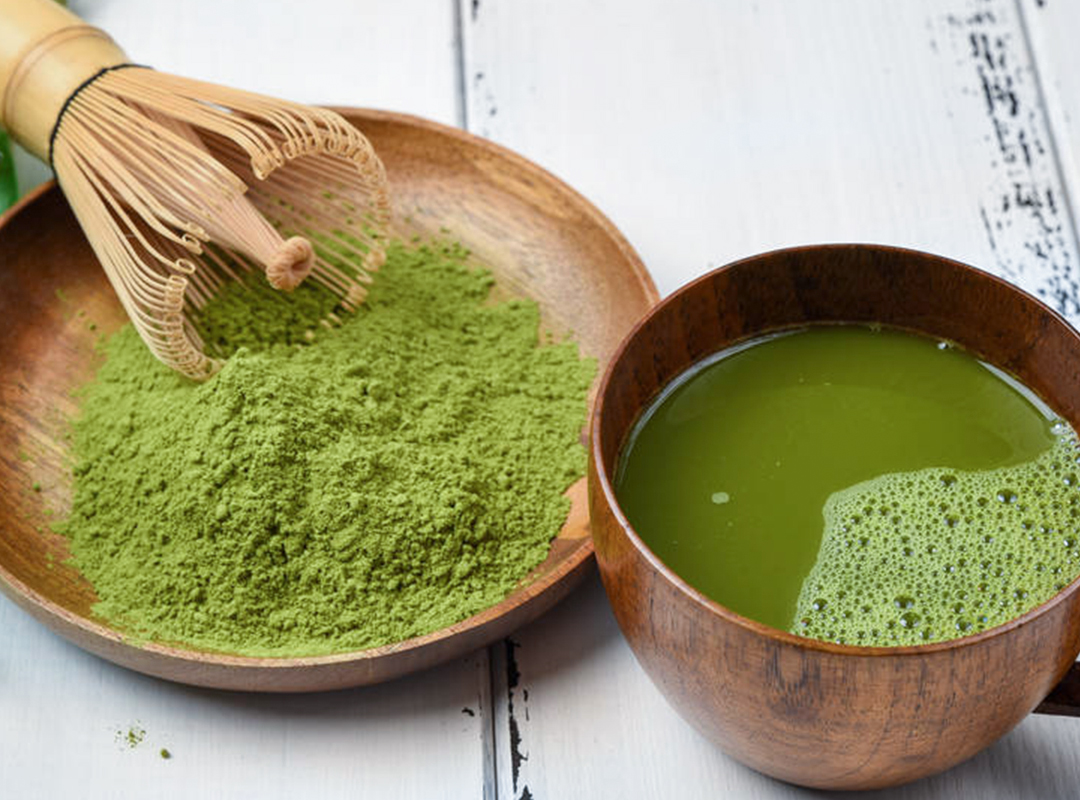
Matcha Is a Source of Plant Compounds
Matcha provides more than caffeine.
Because it is made from powdered tea leaves, it contains a variety of naturally occurring plant compounds.
These can include:
-
Catechins
-
Other polyphenols
-
Caffeine
-
L-theanine
-
Chlorophyll
-
Minerals
-
Other tea-derived compounds
The exact composition depends on the raw material and processing conditions.
This makes matcha different from beverages that contain isolated caffeine alone.
When you drink matcha, you are consuming a tea-based product containing a broader range of naturally occurring compounds.
Matcha Can Be Part of a Balanced Diet
One of the most realistic ways to think about matcha benefits is as part of an overall dietary pattern.
Matcha can be incorporated into a balanced lifestyle in many ways.
For example:
-
A morning matcha drink
-
A matcha latte
-
Unsweetened iced matcha
-
Matcha blended into a smoothie
-
Matcha used in yogurt
-
Matcha incorporated into desserts
The nutritional value of the final product depends heavily on what else is added.
For example, unsweetened matcha contains very different amounts of sugar and calories from a highly sweetened matcha latte.
Therefore, the potential benefits of matcha should be considered alongside the complete recipe.
Matcha Can Be an Alternative to Coffee
For people who enjoy caffeinated beverages, matcha can be an alternative to coffee.
The two beverages have different:
-
Flavor profiles
-
Caffeine levels
-
Preparation methods
-
Cultural traditions
-
Food applications
Coffee typically provides more caffeine per standard serving than a basic serving of matcha.
Matcha, however, provides caffeine together with naturally occurring tea compounds such as L-theanine and catechins.
This makes matcha particularly versatile for people who want a caffeinated beverage with a tea-based flavor.
Matcha vs Coffee: Which Is Healthier?
There is no simple answer.
Both coffee and matcha can fit into a balanced diet.
Coffee contains naturally occurring compounds such as:
-
Caffeine
-
Chlorogenic acids
-
Other polyphenols
Matcha contains:
-
Caffeine
-
Catechins
-
EGCG
-
L-theanine
-
Other tea polyphenols
The better choice depends on your personal preferences, caffeine tolerance, preparation method, and overall diet.
A plain matcha drink and a heavily sweetened matcha latte are also nutritionally very different products.
The same applies to coffee.
A simple brewed coffee is very different from a large coffee drink containing significant amounts of sugar, cream, and flavored syrups.
Therefore, it is more useful to compare the actual beverage rather than simply comparing “matcha” with “coffee.”
Matcha vs Green Tea: Are the Benefits Different?
Matcha and green tea share many naturally occurring compounds because they come from the same tea plant.
The biggest difference is how they are consumed.
Traditional green tea
The leaves are steeped in water.
The leaves are usually discarded.
Matcha
The leaves are processed into a powder.
The powder is consumed as part of the beverage.
Because the entire powdered leaf is consumed, matcha can provide a concentrated way of consuming tea-derived compounds.
However, this does not automatically mean that matcha is “healthier” than every type of green tea.
The nutritional composition of both products depends on:
-
Tea variety
-
Growing conditions
-
Processing
-
Serving size
-
Preparation
The most useful distinction is that matcha allows you to consume the powdered tea leaf directly.
Does Matcha Help With Weight Loss?
This is one of the most common questions about matcha.
The answer requires some caution.
Green tea and green tea catechins have been studied for their potential relationship with energy metabolism and body weight.
Some research has reported small effects in certain circumstances, while other studies have found limited or inconsistent results.
This means it is not appropriate to describe matcha as a weight-loss treatment.
Drinking matcha alone does not replace:
-
A balanced diet
-
Appropriate calorie intake
-
Physical activity
-
Adequate sleep
-
Sustainable lifestyle habits
If you enjoy matcha, choosing an unsweetened or lightly sweetened version can be a practical beverage choice.
But matcha should not be promoted as a magic solution for losing weight.
Does Matcha Have Anti-Inflammatory Benefits?
Tea polyphenols, including catechins, have been investigated for their potential biological effects related to oxidative stress and inflammation.
However, much of the evidence comes from laboratory studies, animal research, or broader research on green tea compounds.
That means it would be too strong to say:
“Matcha treats inflammation.”
A more appropriate statement is:
“Matcha contains polyphenols that have been studied for their antioxidant and other biological activities.”
This distinction is important when creating evidence-based nutrition content.
Does Matcha Support Heart Health?
Green tea consumption has been studied in relation to cardiovascular health.
Research has investigated associations involving:
-
Blood pressure
-
Cholesterol
-
Vascular function
-
Cardiovascular risk
However, research results vary, and evidence specifically focused on matcha is more limited than the broader literature on green tea.
Therefore, matcha should not be presented as a treatment or prevention strategy for cardiovascular disease.
Instead, it can be considered one plant-based beverage that may fit within an overall healthy dietary pattern.
For anyone with cardiovascular concerns or taking medication, individual medical advice should come from a qualified healthcare professional.
Does Matcha Support Brain Health?
The caffeine and L-theanine in tea have attracted research interest in relation to cognition and attention.
Caffeine is known to increase alertness.
L-theanine has been studied for potential effects on relaxation and cognitive performance, particularly when combined with caffeine.
Some research has reported potential benefits for aspects of attention and mental performance.
However, these findings should not be interpreted as proof that matcha prevents neurological disease or dramatically improves long-term brain health.
More research is needed to understand the long-term effects of regular matcha consumption specifically.
Does Matcha Contain More Antioxidants Than Green Tea?
You will often see claims online that matcha contains dramatically more antioxidants than regular green tea.
The comparison is more complicated than a single number suggests.
Matcha contains powdered tea leaf, meaning the entire leaf material is consumed.
Traditional green tea is an infusion, and the amount of compounds extracted into the water depends on:
-
Tea type
-
Leaf quantity
-
Water temperature
-
Steeping time
-
Preparation method
Therefore, antioxidant intake cannot be accurately compared using a universal “X times more” statement.
The specific matcha product and preparation method matter.
Is Matcha Good for Energy?
Matcha can provide caffeine, so it can contribute to alertness and energy perception.
However, “energy” can mean different things.
Physical energy
Caffeine does not provide calories or replace food.
Alertness
Caffeine can reduce feelings of tiredness and increase alertness.
Subjective energy
People may perceive increased energy after consuming caffeine.
Therefore, it is more accurate to describe matcha as a caffeinated beverage that can support alertness rather than claiming that matcha provides a special form of physical energy.
Can You Drink Matcha Every Day?
Many people enjoy matcha as part of their daily beverage routine.
For healthy adults, moderate caffeine intake is generally compatible with a normal diet, but individual tolerance varies.
If you drink matcha every day, consider:
-
How much matcha you consume
-
Your total caffeine intake
-
Whether you add sugar or syrups
-
Your sensitivity to caffeine
-
The time of day you drink it
Remember that caffeine is not only found in matcha.
Other sources may include:
-
Coffee
-
Black tea
-
Green tea
-
Energy drinks
-
Chocolate
-
Some supplements
Your total daily intake matters.
Are There Any Downsides to Matcha?
Matcha can be a nutritious beverage, but it is not appropriate to describe it as completely risk-free.
The most obvious consideration is caffeine.
People who are sensitive to caffeine may experience:
-
Difficulty sleeping
-
Restlessness
-
Nervousness
-
Increased heart rate
-
Digestive discomfort
The response varies from person to person.
Matcha can also contain naturally occurring compounds and minerals that may interact with individual dietary or medical considerations.
People who are pregnant, sensitive to caffeine, taking medications, or managing a medical condition should consult an appropriate healthcare professional about their individual caffeine and dietary needs.
Is Matcha Better Without Sugar?
If your goal is to enjoy the nutritional characteristics of matcha while keeping added sugar low, unsweetened matcha is the simplest option.
However, there is nothing inherently wrong with enjoying matcha in a latte or dessert.
The nutritional profile depends on the complete recipe.
For example:
Unsweetened matcha
Mostly provides the characteristics of the tea powder and water.
Matcha latte
Adds milk or plant-based milk.
Sweetened matcha latte
Adds sugar, syrup, or another sweetener.
Matcha dessert
May contain significant amounts of sugar and fat.
Therefore, the phrase “matcha is healthy” is too broad.
A better approach is to evaluate the complete food or beverage.
How Much Matcha Should You Drink?
There is no universal amount of matcha that is ideal for everyone.
A common serving is around 1–2 grams of powder.
Your preferred serving depends on:
-
Caffeine sensitivity
-
Flavor preference
-
Preparation method
-
Beverage size
-
Frequency of consumption
If you are new to matcha, starting with a smaller amount can help you understand how your body responds.
You can then adjust the serving according to your preferences.
How to Get the Most From Matcha
If you want to include matcha in your diet, a few practical habits can help.
Choose a product appropriate for your use
Drinking matcha, latte matcha, and culinary matcha may have different flavor and performance characteristics.
Pay attention to freshness
Matcha is sensitive to environmental conditions.
Keep it protected from:
-
Light
-
Heat
-
Moisture
-
Excessive air exposure
Watch your preparation
Very hot water can make some matcha taste more bitter.
Our guide How to Prepare Matcha explains the basic preparation process in more detail.
Keep added sugar reasonable
If you drink matcha regularly, large amounts of sugar can change the nutritional profile of the beverage.
Consider your total caffeine intake
Matcha is still a caffeinated beverage.
Matcha Benefits for Different Applications
Matcha is not only consumed as a traditional tea.
Its distinctive color, flavor, and powder format make it useful across the food and beverage industry.
Matcha beverages
Matcha is widely used in:
-
Matcha lattes
-
Iced matcha
-
Smoothies
-
Ready-to-drink beverages
Food products
Matcha can be incorporated into:
-
Bakery products
-
Ice cream
-
Chocolate
-
Desserts
-
Snacks
-
Yogurt
Functional beverage development
Brands may use matcha as one component of a broader beverage formulation.
However, any nutrition or health claim on a commercial product needs to comply with the regulations of the target market.
Matcha Benefits for Cafes and Beverage Brands
For cafes, the benefits of matcha extend beyond its nutritional characteristics.
Matcha provides a distinctive:
-
Green color
-
Tea flavor
-
Aroma
-
Preparation experience
-
Menu identity
This has made matcha increasingly versatile as a beverage ingredient.
A cafe can offer:
-
Traditional matcha
-
Matcha latte
-
Iced matcha
-
Matcha with oat milk
-
Matcha smoothies
-
Seasonal matcha drinks
For commercial beverage brands, however, product consistency is critical.
A suitable matcha should be evaluated for:
-
Flavor intensity
-
Color
-
Solubility
-
Dispersion
-
Batch consistency
-
Caffeine specification
-
Cost per serving
This is why commercial matcha sourcing should focus on application performance rather than relying only on product labels.
Matcha Benefits for Food Manufacturers
Food manufacturers can use matcha as an ingredient in a wide variety of products.
Examples include:
-
Matcha cookies
-
Matcha cakes
-
Matcha ice cream
-
Matcha chocolate
-
Matcha fillings
-
Matcha beverage powders
-
Matcha snack products
The amount of matcha used in each serving can vary significantly.
If nutritional or caffeine information is required, manufacturers should calculate the final formulation using appropriate ingredient specifications and, where necessary, laboratory analysis.
This is particularly important when selling products across different markets with different labeling requirements.
Matcha and OEM / Private Label Products
For private-label brands, matcha can be developed into different product formats.
A brand may want:
-
Premium drinking matcha
-
Matcha latte powder
-
Culinary matcha
-
Matcha beverage ingredients
-
Bulk matcha
-
Custom packaging
-
Private-label matcha
The product specification should be based on the target customer and intended use.
For example, a premium tea brand may prioritize flavor and drinking quality.
A cafe supplier may prioritize consistency and cost per serving.
A food manufacturer may prioritize color, flavor intensity, and application performance.
This is why there is no single definition of the “best matcha.”
The right matcha is the one that meets the requirements of the final product.
How Sevalley Matcha Approaches Matcha Quality
At Sevalley Matcha, matcha is treated as a food and beverage ingredient with different requirements depending on its intended application.
For customers sourcing matcha for commercial use, important factors can include:
-
Product specifications
-
Flavor
-
Color
-
Caffeine content
-
Application
-
Quality consistency
-
Packaging
-
Testing
-
Supply requirements
Sevalley supports matcha solutions for different applications, including drinking matcha, beverage applications, baking, OEM, and private label.
For commercial customers, product selection can be based on the requirements of the final product rather than simply choosing a generic “premium” label.
This is particularly useful for brands developing new matcha products or businesses looking for a consistent long-term matcha supply.
FAQ
Q: What are the main benefits of matcha?
A: Matcha provides naturally occurring compounds such as catechins, EGCG, L-theanine, caffeine, and other polyphenols. These compounds contribute to matcha's nutritional and functional characteristics.
Q: Is matcha healthier than coffee?
A: There is no universal answer. Both can fit into a balanced diet. Matcha provides tea compounds such as catechins and L-theanine, while coffee contains its own range of polyphenols and naturally occurring compounds.
Q: Does matcha give you energy?
A: Matcha contains caffeine, which can increase alertness and reduce feelings of tiredness. It does not provide physical energy in the same way that calories from food do.
Q: Does matcha help with weight loss?
A: Research on green tea compounds has investigated possible effects on metabolism and body weight, but evidence is not strong enough to treat matcha as a weight-loss solution. Diet, physical activity, and overall lifestyle remain much more important.
Q: Does matcha have antioxidants?
A: Yes. Matcha contains naturally occurring polyphenols and catechins with antioxidant properties.
Q: What is EGCG in matcha?
A: EGCG, or epigallocatechin gallate, is one of the major catechins found in green tea. It has been widely studied for its antioxidant and other biological properties.
Q: Does matcha contain L-theanine?
A: Yes. Matcha naturally contains L-theanine, an amino acid found in tea.
Q: Can I drink matcha every day?
A: Many people consume matcha regularly. Because it contains caffeine, your individual caffeine sensitivity and total daily caffeine intake should be considered.
Q: Is matcha good for focus?
A: Matcha contains caffeine and L-theanine. Research on these compounds has investigated attention and cognitive performance, although individual experiences vary and matcha should not be considered a treatment for cognitive disorders.
Q: Is matcha good for your heart?
A: Green tea consumption and tea compounds have been studied in relation to cardiovascular health, but matcha should not be considered a treatment for heart disease. A balanced diet and healthy lifestyle are more important.
Q: Is matcha good before exercise?
A: Matcha contains caffeine, which some people consume before physical activity. However, individual caffeine tolerance varies, and matcha should not replace proper hydration or nutrition.
Does matcha have more antioxidants than green tea?
Matcha contains powdered tea leaf, so the entire leaf is consumed. However, antioxidant content varies by product and preparation, making simple “X times more” comparisons unreliable.
Is culinary matcha healthy?
Culinary matcha contains many of the naturally occurring compounds found in other matcha products. However, the overall nutritional profile of a food containing culinary matcha depends on the complete recipe.
Final Takeaway: What Are the Benefits of Matcha?
Matcha is more than a colorful tea powder.
It naturally contains a range of compounds, including:
Caffeine
L-theanine
Catechins
EGCG
Other polyphenols
These compounds contribute to the nutritional and sensory characteristics that make matcha unique.
The strongest practical takeaway is not that matcha is a miracle food.
It is that matcha can be a nutrient-rich, versatile tea ingredient that provides naturally occurring plant compounds and caffeine.
Research into green tea and its compounds suggests potential benefits in areas such as antioxidant activity, attention, and cardiovascular health, but the evidence is not equally strong for every claim, and research specifically focused on matcha is still developing.
Therefore, matcha should be viewed as part of a balanced diet rather than a replacement for medical treatment or healthy lifestyle habits.
For consumers, the simplest approach is to choose a quality matcha, prepare it properly, and pay attention to caffeine and added sugar.
For cafes, beverage brands, food manufacturers, and private-label businesses, the question is broader.
The right matcha should provide the appropriate:
-
Flavor
-
Color
-
Caffeine level
-
Application performance
-
Consistency
-
Product specifications
At Sevalley Matcha, different matcha solutions can be developed for drinking, beverages, baking, OEM, and private-label applications.
Matcha does not need exaggerated health claims to be valuable.
Its natural combination of tea compounds, distinctive flavor, vibrant color, and versatility already makes it an interesting ingredient for both consumers and modern food and beverage brands.