
Matcha for Lattes & Baking: How to Choose the Right Matcha Powder
Matcha is no longer limited to traditional tea preparation.
Today, matcha powder is widely used in matcha lattes, iced drinks, smoothies, cakes, cookies, ice cream, chocolate, pastries, and other food and beverage products.
But not every matcha powder performs the same way in every application.
The matcha that tastes excellent when prepared with water may not necessarily be the most practical choice for a large-batch latte program. Likewise, a matcha designed for baking may need stronger flavor and color characteristics than a matcha intended for traditional drinking.
So, what matcha is best for lattes and baking?
The answer depends on the application.
For lattes, important characteristics can include smooth flavor, vibrant color, good dispersion, and a balanced level of bitterness and umami.
For baking, manufacturers often need to consider color stability, flavor intensity, consistency, dosage, and cost per serving.
In this guide, we explain how to choose matcha for lattes and baking, how culinary matcha compares with drinking-grade matcha, how much matcha to use, and what commercial buyers should consider when sourcing matcha powder.
Quick Answer: What Matcha Is Best for Lattes and Baking?
For matcha lattes, choose a matcha powder with:
-
Good color
-
Smooth flavor
-
Balanced bitterness
-
Good dispersion
-
Strong enough flavor to work with milk
-
Consistent quality
For baking, choose a matcha powder based on:
-
Color
-
Flavor intensity
-
Heat/application performance
-
Consistency
-
Required dosage
-
Cost
-
Final product formulation
A higher-priced drinking matcha is not automatically the best choice for every latte or baking application.
Likewise, a culinary matcha does not necessarily mean low quality.
The most important question is:
Does the matcha perform well in the specific product you are making?
What Is Matcha Latte?
A matcha latte is a beverage made by combining matcha powder with water and milk or a milk alternative.
A basic matcha latte typically contains:
-
Matcha powder
-
Water
-
Milk or plant-based milk
-
Optional sweetener
Matcha lattes can be served:
-
Hot
-
Iced
-
With dairy milk
-
With oat milk
-
With soy milk
-
With almond milk
-
With other plant-based alternatives
The preparation method can affect the final taste and texture.
Because milk dilutes the flavor of matcha, the powder used for a latte needs enough flavor intensity to remain noticeable after mixing.
This is one reason cafes often select matcha differently from customers preparing traditional matcha with water.
What Makes a Good Matcha for Lattes?
A good latte matcha needs to perform well in a more complex beverage environment.
When matcha is mixed with milk, several things happen.
The milk contributes:
-
Creaminess
-
Sweetness
-
Fat
-
Protein
-
Its own flavor
These characteristics can soften the perception of matcha.
As a result, a very delicate matcha may become difficult to detect in a large latte.
For latte applications, many buyers look for a matcha with:
Vibrant green color
Color is particularly important for commercial matcha beverages because consumers often associate a vivid green appearance with matcha.
Balanced bitterness
Some bitterness is natural in tea, but excessive bitterness can become more noticeable when the drink contains little or no sweetener.
Strong tea character
The matcha flavor should remain identifiable after being combined with milk.
Good texture
A fine powder that disperses effectively can produce a smoother beverage.
Consistent quality
For cafes and beverage brands, consistency between batches is critical.
What Is the Best Matcha for a Matcha Latte?
There is no single matcha that is objectively best for every latte.
Instead, the right matcha depends on the recipe and target market.
For example:
Premium cafe latte
A cafe may prefer a smoother matcha with a refined flavor and vibrant color.
Sweetened commercial latte
A stronger matcha may work well because the flavor needs to remain noticeable alongside sugar or syrup.
Ready-to-drink matcha beverage
The manufacturer may prioritize dispersion, color, stability, flavor, and production consistency.
Matcha latte powder
The matcha may be blended with milk powder, sugar, or other ingredients, making formulation compatibility particularly important.
Therefore, the ideal matcha should be selected based on the complete formulation, not simply the product name.
Ceremonial Matcha vs Culinary Matcha for Lattes
This is one of the most common questions about matcha.
Can culinary matcha be used for lattes?
Yes.
Can higher-grade drinking matcha be used for lattes?
Also yes.
The choice depends on the intended product.
Traditionally, higher-quality drinking matcha is associated with direct consumption, where its delicate flavor can be appreciated with minimal ingredients.
Culinary matcha is generally intended for applications where matcha is combined with other ingredients.
For example:
-
Milk
-
Sugar
-
Flour
-
Chocolate
-
Cream
-
Butter
-
Ice cream base
This does not mean culinary matcha is automatically inferior.
It means that the product is designed around a different application.
For commercial latte production, a culinary or latte-focused matcha can sometimes provide a better balance of flavor, color, performance, and cost.
Why Color Matters in Matcha Lattes
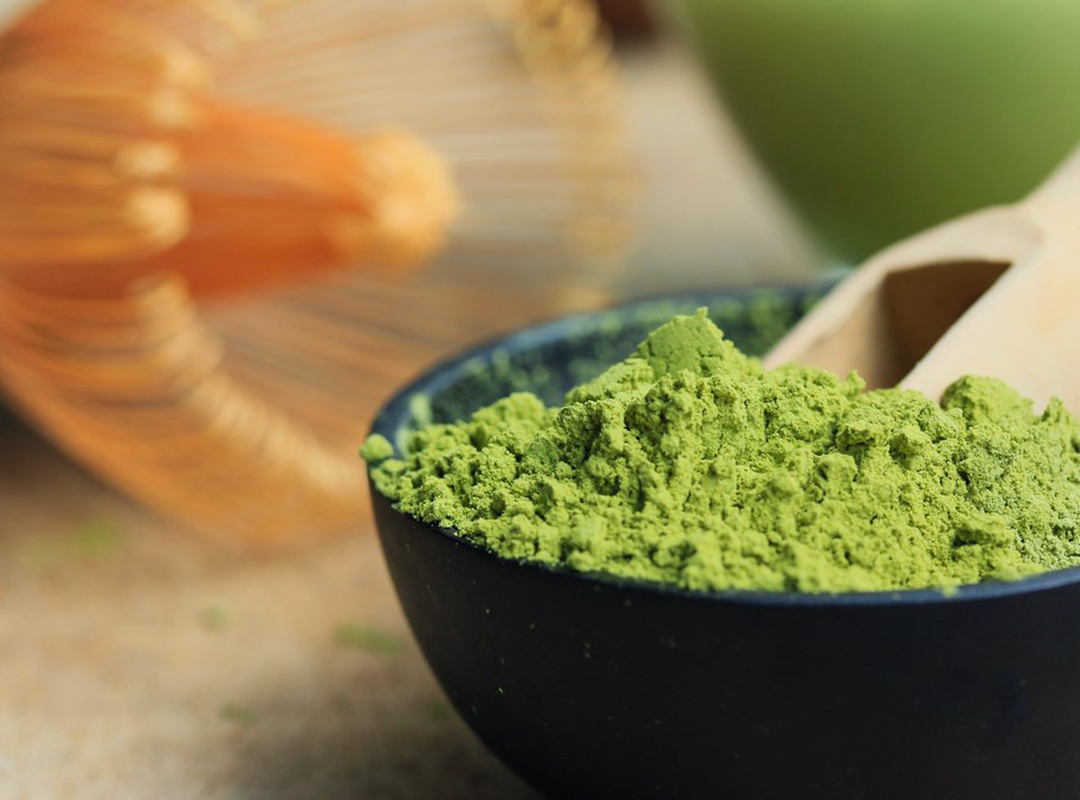
Matcha is instantly recognizable by its green color.
For many consumers, color is part of the product experience.
A latte with a vibrant green appearance can communicate:
-
Matcha flavor
-
Tea identity
-
Freshness
-
Premium positioning
However, color alone should never be used as the only measure of matcha quality.
A high-quality matcha should be evaluated using multiple characteristics, including:
-
Aroma
-
Flavor
-
Texture
-
Color
-
Origin and raw material
-
Processing
-
Storage
-
Testing
-
Consistency
For commercial applications, color can still be an important selection criterion because the final appearance of the beverage directly affects consumer perception.
How Much Matcha Should You Use for a Latte?
There is no universal dosage.
A common starting point for an individual matcha latte is approximately:
1–2 grams of matcha powder per serving.
Some stronger recipes may use more.
For example:
Light matcha latte
1 gram
Suitable for consumers who prefer a mild tea flavor.
Standard matcha latte
1.5–2 grams
Provides a stronger matcha character while maintaining a balanced milk flavor.
Strong matcha latte
2–3 grams or more
Creates a more intense tea flavor and generally increases caffeine content.
The ideal dosage depends on:
-
Beverage volume
-
Milk type
-
Sweetener level
-
Matcha intensity
-
Target price
-
Desired caffeine content
For commercial production, dosage should be standardized through testing rather than relying solely on a generic recipe.
Matcha for Iced Lattes
Iced matcha lattes have become a popular application for matcha powder.
The basic process is similar to a hot latte, but the final drink is served cold.
A typical iced matcha latte may include:
-
Matcha powder
-
Warm water
-
Ice
-
Milk
-
Optional sweetener
One important consideration is dispersion.
Matcha does not completely dissolve like sugar.
Instead, the fine tea particles become suspended throughout the liquid.
If the powder is not mixed properly, the drink may develop clumps or settle.
For this reason, commercial users should evaluate the matcha's behavior during actual beverage preparation.
Can Matcha Be Used with Oat Milk?
Yes.
Matcha pairs particularly well with many plant-based milk alternatives.
Oat milk is popular in matcha lattes because its naturally creamy texture and mild sweetness can complement the grassy and umami characteristics of matcha.
However, different plant-based milks have different:
-
Fat content
-
Protein content
-
Sweetness
-
Texture
-
Acidity
This means the same matcha can taste different depending on the milk used.
If you are developing a commercial matcha latte, test the matcha with the exact milk formulation you plan to use.
Matcha for Baking
Matcha is also widely used in baking.
It can provide both color and flavor to baked products.
Common applications include:
-
Matcha cookies
-
Matcha cakes
-
Matcha brownies
-
Matcha muffins
-
Matcha bread
-
Matcha pastries
-
Matcha cheesecake
-
Matcha macarons
Unlike a traditional matcha drink, baking introduces additional ingredients and processing conditions.
The matcha must work with:
-
Flour
-
Sugar
-
Butter
-
Eggs
-
Milk
-
Chocolate
-
Cream
-
Other flavor ingredients
Therefore, baking matcha is selected according to the final recipe.
What Matcha Is Best for Baking?
For many baking applications, a culinary-focused matcha is a practical choice.
Why?
Because baking recipes often require enough matcha powder to provide noticeable flavor and color.
Using a very expensive drinking matcha in a strongly flavored cake may not always provide a meaningful advantage.
For commercial baking, buyers often evaluate:
Color
Will the final product have the desired green appearance?
Flavor intensity
Can the matcha flavor remain noticeable after mixing with flour, sugar, butter, chocolate, or other ingredients?
Consistency
Does the product perform consistently from batch to batch?
Cost
Is the ingredient cost appropriate for the final product?
Application performance
Does the matcha work well in the actual manufacturing process?
These factors can be more important than simply choosing the most expensive matcha available.
Matcha for Cookies
Matcha cookies are one of the simplest applications for culinary matcha.
A basic matcha cookie recipe may contain:
-
Flour
-
Butter
-
Sugar
-
Egg
-
Matcha powder
-
Baking powder or baking soda
The matcha provides:
-
Green color
-
Tea aroma
-
Tea flavor
For cookies, the matcha needs enough flavor intensity to remain noticeable alongside butter and sugar.
If too little matcha is used, the final cookie may look only slightly green and have a weak tea flavor.
If too much is used, the cookie can become excessively bitter.
This makes dosage an important part of recipe development.
Matcha for Cakes
Matcha can be incorporated into:
-
Sponge cakes
-
Chiffon cakes
-
Pound cakes
-
Layer cakes
-
Cupcakes
-
Cheesecakes
Cake recipes typically contain more ingredients than a simple matcha drink.
The matcha flavor must therefore be balanced against:
-
Sugar
-
Dairy
-
Eggs
-
Vanilla
-
Chocolate
-
Fruit
-
Cream
For a commercial cake product, the ideal matcha may be one that provides a strong enough flavor and attractive color without requiring an excessive dosage.
Matcha for Ice Cream
Matcha is particularly popular in ice cream and other frozen desserts.
The creamy base can soften the bitterness of tea while allowing matcha's distinctive flavor to remain noticeable.
Matcha ice cream may contain:
-
Matcha powder
-
Milk
-
Cream
-
Sugar
-
Stabilizers
-
Other ingredients
Because matcha is added to a high-volume formulation, the choice of powder can affect the final:
-
Color
-
Aroma
-
Flavor
-
Bitterness
-
Cost
For commercial production, testing different matcha dosages is usually more useful than choosing a product based only on its grade name.
Matcha for Chocolate
Matcha and chocolate can create a distinctive flavor combination.
Matcha can be used in:
-
White chocolate
-
Chocolate bars
-
Truffles
-
Chocolate fillings
-
Matcha ganache
-
Matcha-coated snacks
White chocolate is particularly compatible with matcha because its sweetness and creamy flavor can balance the tea's bitterness.
Again, dosage matters.
A strong matcha can dominate the chocolate flavor, while a low dosage may become difficult to detect.
Does Matcha Lose Its Color When Baked?
Matcha's color can change during processing.
Heat, exposure to oxygen, pH, storage, and other formulation factors can influence the appearance and flavor of tea-based ingredients.
This means the bright green color of matcha powder does not necessarily mean the final baked product will have exactly the same color.
For commercial applications, the best approach is to test the actual matcha in the finished recipe.
This is particularly important for products such as:
-
Cookies
-
Cakes
-
Bread
-
Pastries
-
Biscuits
A supplier sample should ideally be evaluated under the same processing conditions used in production.
How Much Matcha Should You Use for Baking?
The answer depends on the recipe.
A small home recipe may use anywhere from 1–5 grams of matcha, depending on the total ingredient volume and desired flavor.
Commercial formulations can be significantly different.
For example:
Matcha cookies
A few grams may be enough for a small batch.
Matcha cake
A higher amount may be needed to produce a stronger flavor throughout the cake.
Matcha ice cream
The required dosage depends on the size of the batch and the intensity of the matcha.
Matcha chocolate
The dosage depends on the chocolate-to-matcha ratio and desired flavor.
There is no universal dosage that works for every application.
The correct approach is:
Start with a controlled dosage → test → adjust → standardize.
Culinary Matcha Does Not Mean “Low Quality”
The word culinary can sometimes create confusion.
Some consumers assume:
Culinary matcha = low-quality matcha.
That is too simplistic.
Culinary matcha is better understood in terms of intended application.
A food manufacturer does not necessarily need a delicate drinking matcha for a chocolate product.
The manufacturer may instead need:
-
Strong color
-
Pronounced tea flavor
-
Good consistency
-
Appropriate cost
-
Reliable supply
A culinary-focused product can therefore be the more suitable choice for commercial food production.
The best matcha is not necessarily the most expensive matcha.
The best matcha is the matcha that performs best in the intended application.
Drinking Matcha vs Latte Matcha vs Culinary Matcha
It can be useful to think of matcha in three broad application categories.
| Characteristic | Drinking Matcha | Latte Matcha | Culinary Matcha |
|---|---|---|---|
| Primary use | Drinking with water | Milk-based beverages | Food & baking |
| Flavor | Delicate to complex | Balanced and noticeable | Strong and noticeable |
| Color | Important | Very important | Important |
| Bitterness | Usually lower | Moderate/balanced | Can be stronger |
| Dosage | Lower | Moderate | Application-dependent |
| Cost sensitivity | Moderate | High | Often high |
| Best for | Traditional preparation | Cafes & beverages | Baking & food |
These categories are general rather than strict industry standards.
A particular matcha can perform well across multiple applications.
How to Choose Matcha for Commercial Lattes
If you are a cafe, restaurant, beverage company, or distributor, consider these questions before purchasing.
1. What is the serving size?
A 250 ml latte and a 500 ml latte may require different matcha dosages.
2. What milk are you using?
Dairy milk and plant-based milk can produce different flavor profiles.
3. Is the drink sweetened?
Sugar can mask bitterness and change the perceived matcha intensity.
4. What color do you want?
Visual appearance can be an important part of your product positioning.
5. What is your target cost?
Premium matcha can increase ingredient cost per serving.
6. What caffeine level do you want?
More matcha generally means more caffeine.
7. Do you need consistent supply?
Commercial beverage businesses need reliable sourcing.
How to Choose Matcha for Commercial Baking
For baking and food manufacturing, evaluate:
Color performance
Does the finished product have the desired appearance?
Flavor strength
Can consumers still identify the matcha after baking?
Heat/application performance
How does the matcha behave under the actual processing conditions?
Dosage
How much matcha is needed per batch?
Cost per finished product
Ingredient cost should be considered alongside product quality.
Batch consistency
Can the supplier provide consistent specifications over time?
Packaging
Matcha should be protected from environmental factors that can negatively affect quality.
Documentation
Commercial buyers may require specifications, testing documentation, and other product information depending on the application and market.
How to Store Matcha for Best Quality
Matcha is a delicate powdered tea product.
After opening, exposure to environmental conditions can gradually affect its quality.
For best results, protect matcha from:
-
Excessive heat
-
Direct light
-
Moisture
-
Air exposure
-
Strong odors
An airtight package is useful for limiting exposure to oxygen and moisture.
For commercial customers, packaging should be selected based on:
-
Product volume
-
Storage conditions
-
Distribution requirements
-
Shelf-life expectations
-
Target market
Proper storage is particularly important for matcha because consumers often value its bright green color and fresh tea aroma.
Why Matcha Quality Matters More in Commercial Applications
For home use, a small difference between batches may not be a major concern.
For a commercial business, it can become much more important.
Imagine a cafe selling hundreds of matcha lattes every week.
If the matcha changes significantly between batches, the:
-
Color may change
-
Flavor may change
-
Bitterness may change
-
Required dosage may change
-
Customer experience may change
This is why commercial matcha sourcing should consider consistency, not just price.
A slightly cheaper matcha may not actually reduce costs if you need to use significantly more powder to achieve the same flavor and color.
Matcha Dosage and Cost Per Serving
For commercial buyers, one useful calculation is:
Cost per serving = matcha cost per gram × matcha grams used per serving
For example, suppose:
-
Matcha cost = $40 per kilogram
-
Dosage = 2 grams
Then:
$40 ÷ 1,000 g = $0.04 per gram
2 g × $0.04 = $0.08 matcha cost per serving
This is only the ingredient cost of the matcha.
The final beverage cost will also include:
-
Milk
-
Sweetener
-
Cup
-
Lid
-
Labor
-
Rent
-
Delivery
-
Other operating costs
This simple calculation can help cafes compare matcha products based on actual cost per serving, rather than price per kilogram alone.
How Sevalley Matcha Can Support Latte and Baking Applications
Sevalley Matcha provides matcha solutions for different food and beverage applications.
For businesses, selecting matcha should start with the intended application.
For example:
Cafes
Matcha for:
-
Hot lattes
-
Iced lattes
-
Traditional drinks
-
Smoothies
Beverage brands
Matcha for:
-
Ready-to-drink beverages
-
Powdered drink mixes
-
Functional beverage formulations
-
Custom beverage products
Bakeries
Matcha for:
-
Cookies
-
Cakes
-
Pastries
-
Bread
-
Desserts
Food manufacturers
Matcha for:
-
Ice cream
-
Chocolate
-
Snacks
-
Dairy products
-
Other food applications
Private-label and OEM brands
Matcha can also be developed around specific product requirements, packaging formats, and commercial volumes.
For commercial sourcing, Sevalley can help buyers evaluate matcha according to application, flavor, color, dosage, specifications, packaging, and supply requirements.
The goal is not simply to sell the most expensive matcha.
The goal is to find a matcha that works for the customer's actual product.
Matcha for Lattes and Baking: Which One Should You Choose?
The answer depends on what you are making.
Choose drinking-focused matcha when:
-
Matcha is served primarily with water
-
Flavor complexity is important
-
You want a refined tea experience
-
The matcha itself is the main focus
Choose latte-focused matcha when:
-
Matcha is mixed with milk
-
You need noticeable tea flavor
-
Color is important
-
You need a balance between quality and cost
Choose culinary-focused matcha when:
-
Matcha is used as a food ingredient
-
It needs to work with other strong flavors
-
Color and flavor intensity are important
-
Cost per serving matters
-
You need larger quantities
Again, these are practical categories rather than strict universal industry definitions.
FAQ
Q: What is the best matcha for lattes?
A: A good latte matcha should have noticeable flavor, attractive color, balanced bitterness, and good performance when mixed with milk. The ideal product depends on the recipe and target price.
Q: Can I use culinary matcha for a latte?
A: Yes. Culinary matcha can be used for lattes, particularly when the beverage requires stronger flavor and color at a controlled cost.
Q: Can I use ceremonial matcha for baking?
A: Yes. However, premium drinking matcha may not always be the most cost-effective option for baking because other ingredients can mask some of its more delicate characteristics.
Q: Is culinary matcha lower quality?
A: Not necessarily. Culinary matcha is generally selected for food applications where color, flavor intensity, consistency, and cost can be important.
Q: How much matcha should I use in a latte?
A: A common starting point is approximately 1–2 grams per serving. Stronger recipes may use more.
Q: How much matcha should I use for baking?
A: The dosage depends on the recipe. Small recipes may use a few grams, while commercial formulations require dosage testing based on the final product.
Q: Can matcha be used in cookies?
A: Yes. Matcha is commonly used in cookies to provide green color and tea flavor.
Q: Can matcha be used in cakes?
A: Yes. Matcha can be used in sponge cakes, chiffon cakes, cupcakes, cheesecakes, and other baked products.
Q: Can matcha be used in ice cream?
A: Yes. Matcha is commonly used in ice cream and other frozen desserts.
Q: Can matcha be used with oat milk?
A: Yes. Oat milk is a popular choice for matcha lattes because its creamy texture and mild sweetness can complement matcha.
Q: Does matcha work with chocolate?
A: Yes. Matcha can be combined with white chocolate, dark chocolate, and other chocolate-based products.
Q: Why does my matcha latte taste bitter?
A: Possible reasons include using too much matcha, using very hot water, choosing a matcha with a stronger bitterness profile, or using insufficient sweetener or milk for your preferred taste.
Q: Why does my matcha cake turn brown?
A: Heat, oxidation, ingredients, processing conditions, and the characteristics of the matcha can all influence the final color. Testing the matcha in the actual recipe is the best way to evaluate performance.
Q: How should matcha be stored?
A: Keep matcha protected from light, moisture, heat, oxygen, and strong odors. Airtight packaging is recommended after opening.
Final Takeaway: Choosing Matcha for Lattes & Baking
Matcha is an unusually versatile tea ingredient.
The same basic powder can become:
A traditional tea.
A creamy latte.
An iced beverage.
A cookie.
A cake.
An ice cream.
A chocolate product.
But the best matcha for one application may not be the best matcha for another.
For lattes, focus on:
-
Color
-
Flavor intensity
-
Bitterness
-
Texture
-
Dispersion
-
Caffeine
-
Cost per serving
For baking, focus on:
-
Color
-
Flavor strength
-
Application performance
-
Dosage
-
Consistency
-
Cost
-
Finished-product performance
Most importantly, do not choose matcha based solely on terms such as “ceremonial” or “culinary.”
Instead, ask:
What does the final product need from the matcha?
A premium drinking matcha may be ideal for a traditional tea experience.
A strong, consistent culinary matcha may be more practical for cookies, cakes, chocolate, and ice cream.
A latte-focused matcha may provide the right balance of color, flavor, and cost for a cafe beverage.
For commercial buyers, the best way to make the decision is to test the matcha in the actual application.
At Sevalley Matcha, matcha can be sourced for drinking, latte, baking, food manufacturing, OEM, and private-label applications.
Whether you are a cafe developing a signature matcha latte or a food brand creating a new matcha product, the right matcha is ultimately the one that delivers the flavor, color, consistency, performance, and cost structure your product requires.
Good matcha is not simply about the grade. It is about the right matcha for the right application.